

Have you ever gotten lost in the very city where you were born and raised?
In my city, people would actually get lost if they had to follow addresses. We’re used to navigating by familiar landmarks like buildings, squares, alleys, roundabouts, or street corners. No one really uses addresses.
What would it be like to deliver in a place like this?
- Project Type: Public Showcase
- Category: Concept Project. This is a fictional concept project and is not associated with any real brand, company, or third party.
- Usage: Portfolio / Non-commercial
- Applications: Ads on Facebook, Instagram, YouTube, the website, internal reporting and usage guidelines.
- My Role: Motion Designer
- My Contributions: Create explainer videos, intro, infographics for Fastship.
PROBLEM
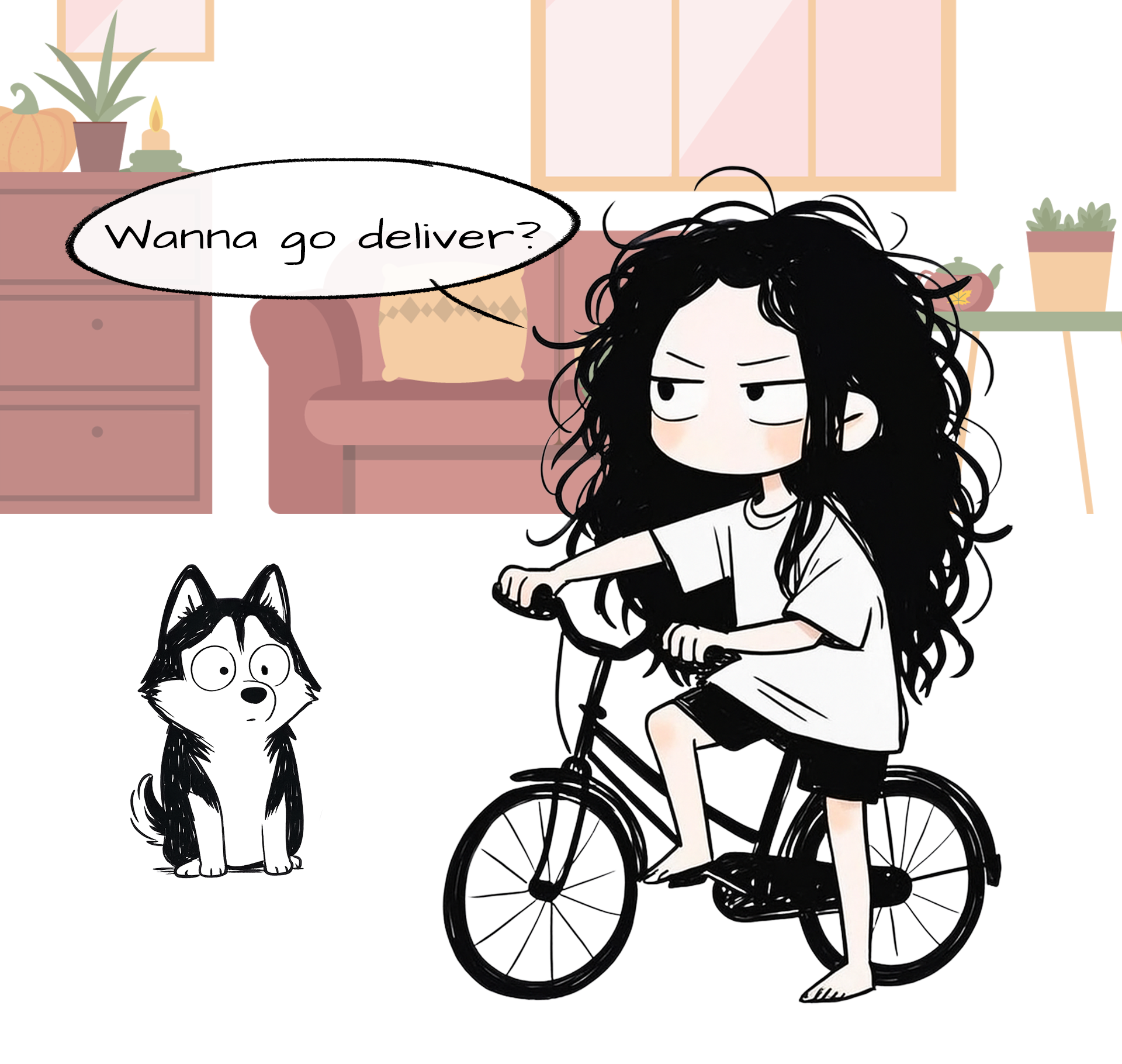
Unclear address input and fragmented logistics workflows led to failed deliveries and user confusion.
- Reason 1: Shippers struggle to find locations using only addresses.
- Reason 2: Recipients often move, making them hard to find and guide.
To solve this, the company introduced a feature on the app allowing users to mark locations with landmarks and images, improving delivery efficiency.
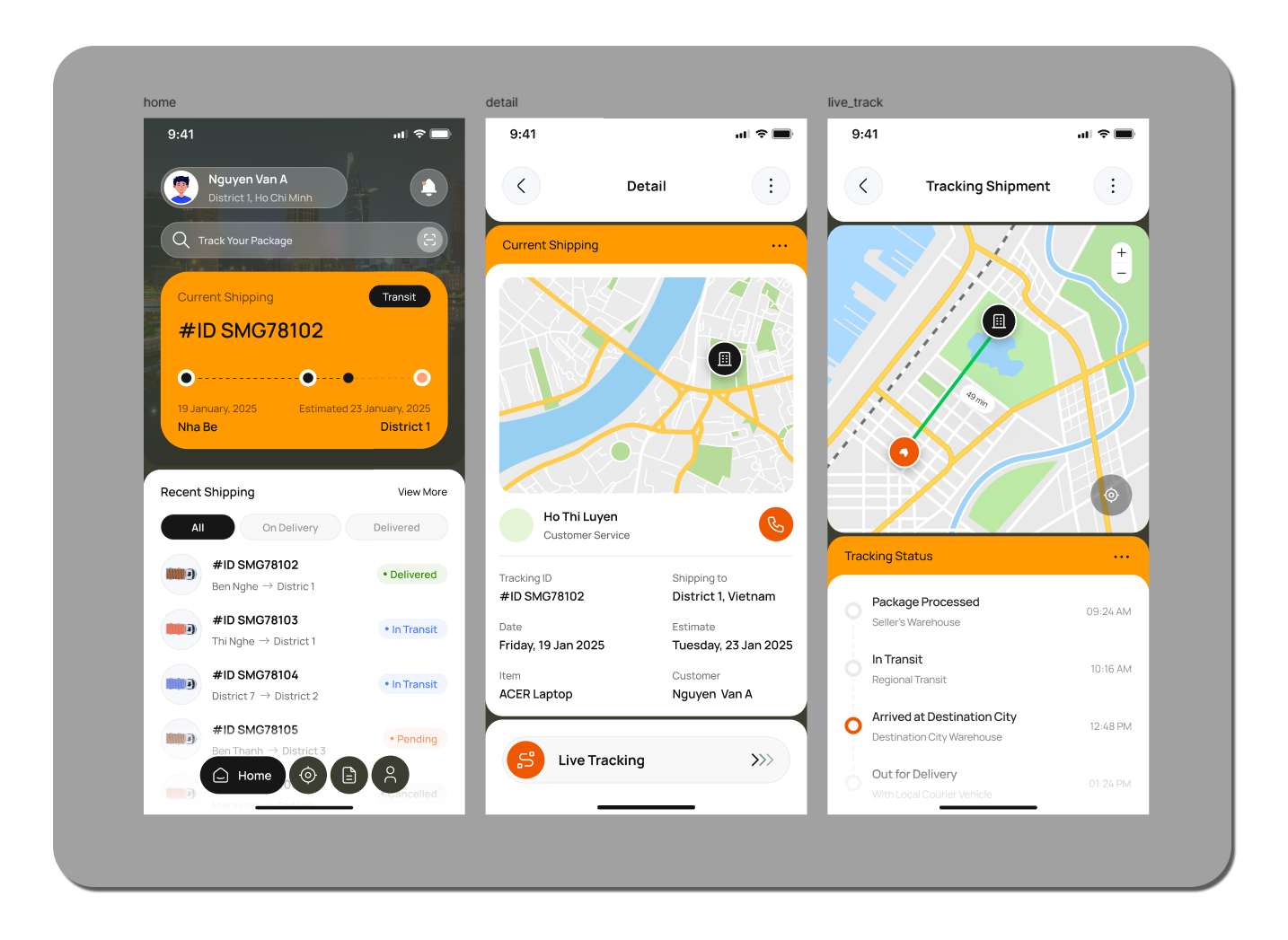

Before
Users struggled to quickly understand delivery status across multiple orders.
After
A structured overview enables fast scanning and clear status recognition.

Before
Users lacked context and had to interpret scattered delivery information.
After
A combined map and structured details provide clear context and easy understanding.

Before
Users struggled to understand current location and delivery progress.
After
Real-time tracking and visual flow make the journey clear and predictable.
SYSTEM
A structured visual system simplifies the delivery flow into clear, actionable steps.
Constraint: Busy users need a quick, to-the-point app guide.
Solution: Use a minimal 2D style with the brand’s orange. Designed for Vietnamese users, simple, fast, concise, and natural, without over-polishing.

OUTCOMES
Intuitive design reduces errors and boosts delivery success.
Explaining the delivery system by visual storytelling
Guiding users through the app’s Keep Track with clear step-by-step interactions
CTA: Order now, we’ll handle the rest
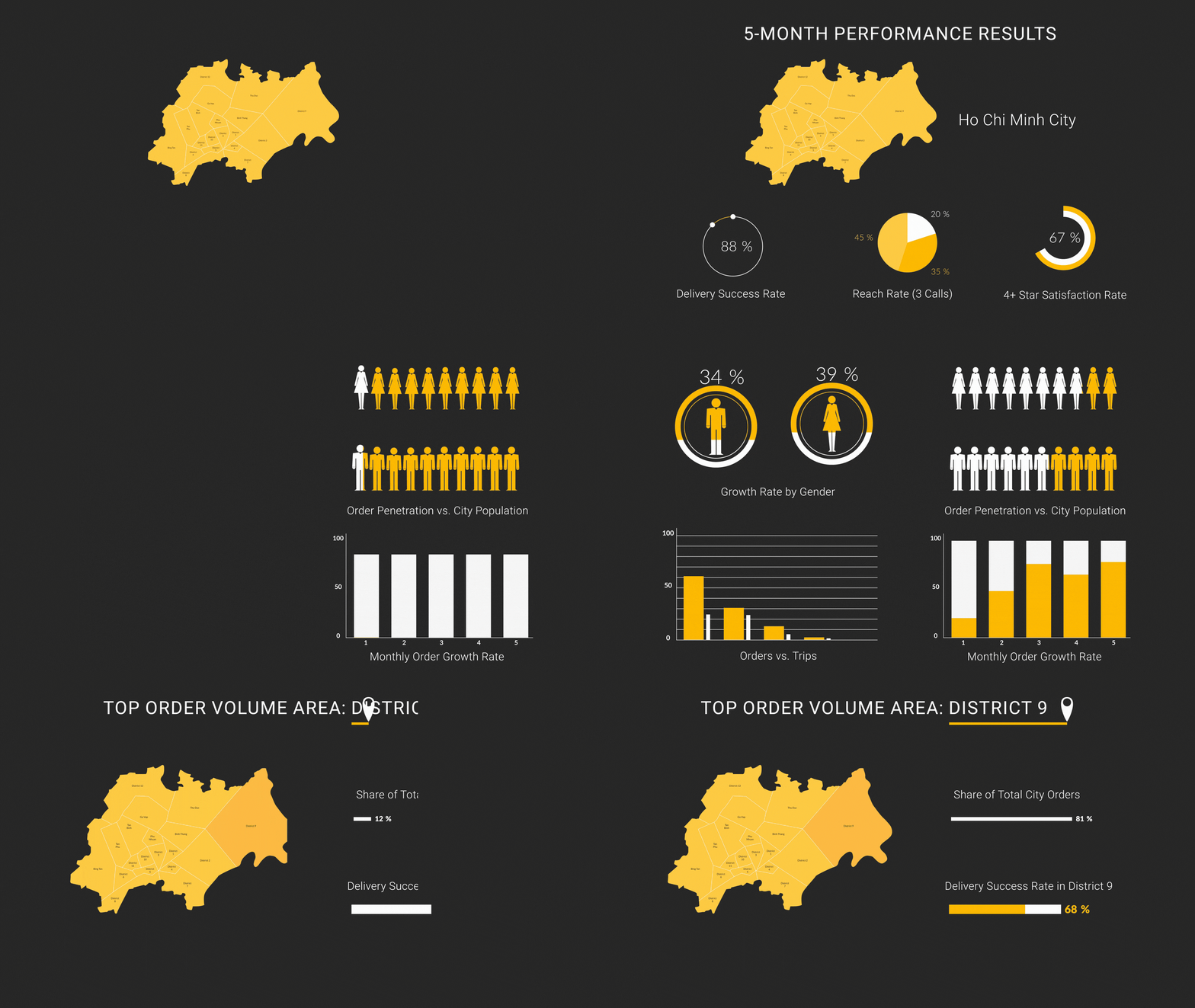
Visualizing delivery performance and user outcomes after 3 months of testing
REFLECTION
I found this project quite boring, especially as an animator who loves flashy VFX and cinematic effects. These videos have none of the explosions or high-impact visuals you’d see in a game trailer. But they raised an important question for me: “If I strip away all the effects, what do I have left?”
Without eye-catching effects or bold colors, I had to return to the essentials: timing and the core message. I had to truly get to the point, because there was nothing left to distract the viewer.
This was also the first time I seriously looked at explainer animation and infographics. This project reinforced the importance of clarity in user flows. Simplifying complex systems into understandable steps helps users make faster and more confident decisions.
There’s no climax, no dramatic peaks or turning points like in the trailers or story-driven work I usually create. Instead, it’s steady and simple, centered around one key question: “What information matters most, and how can I communicate the process clearly and consistently?”